CAN YOU SOLVE THIS QUIZ?


WHAT'S THE BEEF?

picture1-2.webp

We almost never refer to red meat as the animal that it came from. We give it a different name: “Beef” instead of cow, “pork” instead of pig, “veal” instead of calf, “mutton” instead of sheep, “venison” instead of deer.

But we call white meat straight-out what it is: “Chicken,” “turkey,” “fish,” “crab.”

Why the difference?

Here’s a hint: I’m only asking for your opinion. There is no right answer.

SCROLL DOWN FOR THE ANSWER.


ANSWER:

Maybe you have an opinion on this, or maybe you think it’s just a coincidence. But at any rate, here’s my opinion:

In Chapter 5 of Heal Your Mental Disorder, Dr. Partap Chauhan says that it's not natural for us to eat meat--whether it's red or white. He says that our instincts are proof of this: If we saw an animal bleeding to death in the street, we'd probably either turn away in revulsion or try to help the animal. We wouldn't act like a natural meat-eater, and rush in to finish the kill.

I think that's why we don't call our red meat the animals that they are. We instinctively feel revulsed by those animals' corpses. So before we bite into that cow, we'd better call it "steak" or hamburger."

The same goes for pigs. Some people find them so adorable that they raise them as pets. So better change the name to "portk" or "bacon," or you might not enjoy the meat as much.

So why isn't it the same with white-meat animals? Here's what I think: They're not mammals like we are. They're birds, fish, and crustaceans--far enough removed from humans for most people to be aware that they're chomping into a corpse.


dementia-1792798265206.webp


COMING NEXT:


WHICH DEMENTIAS ARE CURABLE?


PREVIOUS QUIZZES


WE'RE NOT VAMPIRES

vampire.webp


A vampire does his thing in the dark, right? He’s a fictitious creature of the night.

But in Heal Your Mental Disorder, doctors say we’re the opposite: We’re meant to be active in the daytime, like the squirrels, bluebirds, and elephants. (See Chapter 12.)

The doctors say you can tell this by the way our hormones work. Come daytime, the hormones that get us up and going—like cortisol and adrenaline--are at their peak. Then once nightfall comes, the sleepy hormone, melatonin, takes over.

But there’s a part of our body that gives this away, too. Can you guess which one it is?

Here’s a hint: You can’t see it unless you look in a mirror.

SCROLL DOWN FOR THE ANSWER.


ANSWER:

It’s our eyes. A lion, racoon, and skunk can see in the dark. Their eyes give it away: These animals are naturally meant to be active at night, not in the daytime. 

But without a flashlight or candle, we’d stumble around in the dark. We need the light of day to even see where we’re going.

Nature designed us to be creatures of the day. And when we go against that, we’re more likely to trip over something, hit someone with our car, or have other accidents.

Criminals know what bumblers we are in the dark, and so they often plan their antics at night, when the darkness hides it from us.

The doctors in Heal Your Mental Disorder say if you want to heal your mental disorder, use your body the way it’s designed to be used. Take your hormones and eyes to be your operating manual. When you use your body machine according to the instructions in the manual, it works better. When you don’t follow the instructions, the machine can break. And when your body breaks down, your mind can break down along with it. 


IS THERE A VACCINE FOR MENTAL DISORDERS?

Hint: This is a trick question.

Scroll down for the answer.


vaccine.webp


ANSWER:

Yes. If you follow the doctors' program in Heal Your Mental Disorder, you'll be vaccinating yourself regularly. This program isn't just a cure; it helps prevent mental disorders, too.

In Heal Your Mental Disorder (Chapter 13), Dr. Jaya Ramanuja Raju advises you not to label yourself with your mental disorder. He says that if you think of your disorder as your identity, you may have a harder time getting rid of it.

Here are some labels. Can you fill in the blanks? (After you're finished, scroll down for the answers.)


I AM...

ps _ _ _ _ _ ic

bu _ _ _ ic

an _ _ _ _ ic

neu _ _ _ ic

ph _ _ ic

b _ _ _ _ ar

sc _ _ _ _ _ _ _ _ _ ic

d _ m _ _ ted

a hy _ _ _ _ _ _ _ _ _ ac


ANSWERS:

psychotic

bulimic

anorexic

neurotic

phobic

bipolar

schizophrenic

demented

a hypochondriac

free-photo-of-portrait-of-a-sad-woman.webp


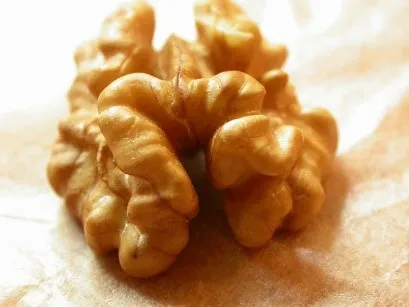
Mother Nature has given us a food that is especially nourishing to our brains. It even looks like a human brain. Can you guess what it is?

Here's a hint: It's a nut.


SCROLL DOWN FOR THE ANSWER.


ANSWER: Walnuts

This is a walnut: And this is a human brain:

BRAIN


WALNUT


PHOTO CREDI

1, Courtesy of Dan Dzurisin, https://www.flickr.com/photos/ndomer73/2582778532, https://creativecommons.org/licenses/by-nc-nd/2.0/)

2. Courtesy of Ruth Hartnup, Camp vamp. A vampire for the scavenger hunt. Flickr, Creative Commons--attribution 2.0 Generic --CC BY 2.0

3. Courtesy of Dan Dzurisin, https://www.flickr.com/photos/ndomer73/2582778532, https://creativecommons.org/licenses/by-nc-nd/2.0/)

4. Courtesy of James Gathany and Judy Schmidt, USCDCP, https://pixnio.com/science/medical-science/adult-female-healthcare-professional-as-she-was-receiving-an-intramuscular-vaccination, https://creativecommons.org/licenses/by-sa/3.0/

5. https://creativecommons.org/public-domain/

6. Walnut: Ioan Sameli, https://www.flickr.com/photos/biwook/141005779, https://creativecommons.org/licenses/by-sa/2.0/

7. Human brain: Courtesy of Neuropathologyblog, https://commons.wikimedia.org/wiki/File:Autopsy_brain.jpg, https://creativecommons.org/licenses/by-sa/3.0/